Machine Learning Project
About This Project
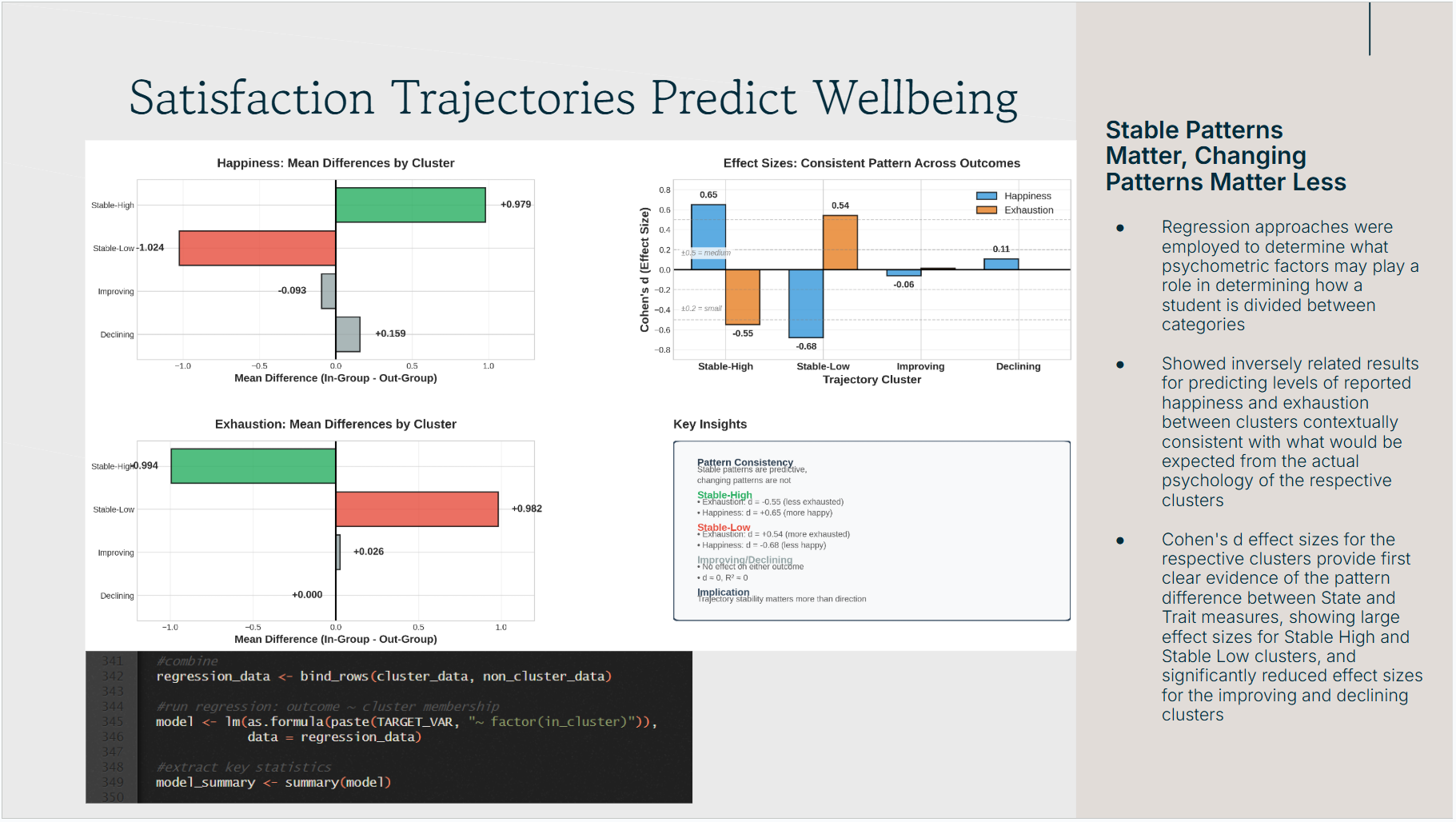
Given measurements of change in an individual's reported satisfaction with their academic study over time, is it possible to identify patterns which relate to broader personal wellbeing?
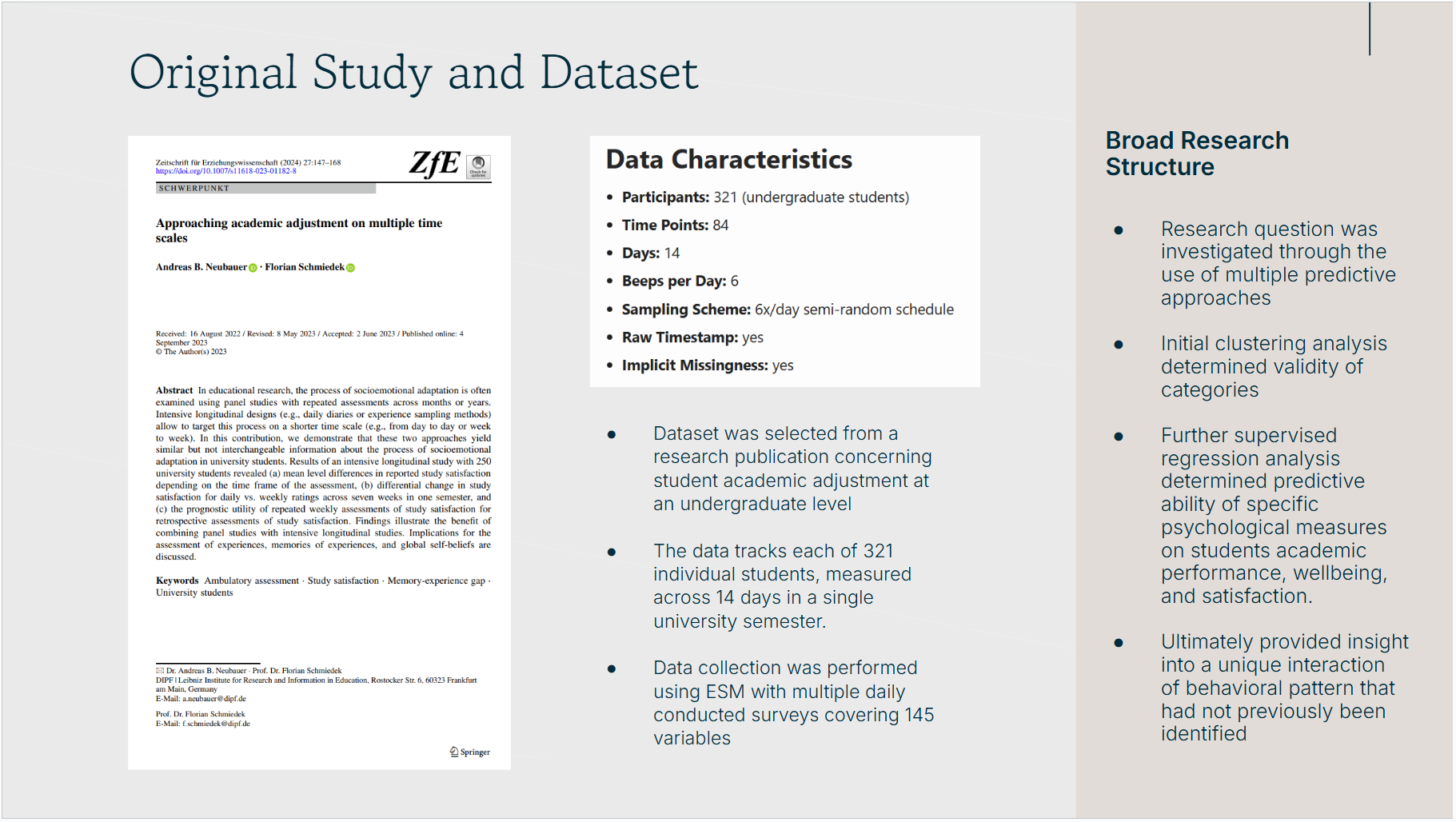
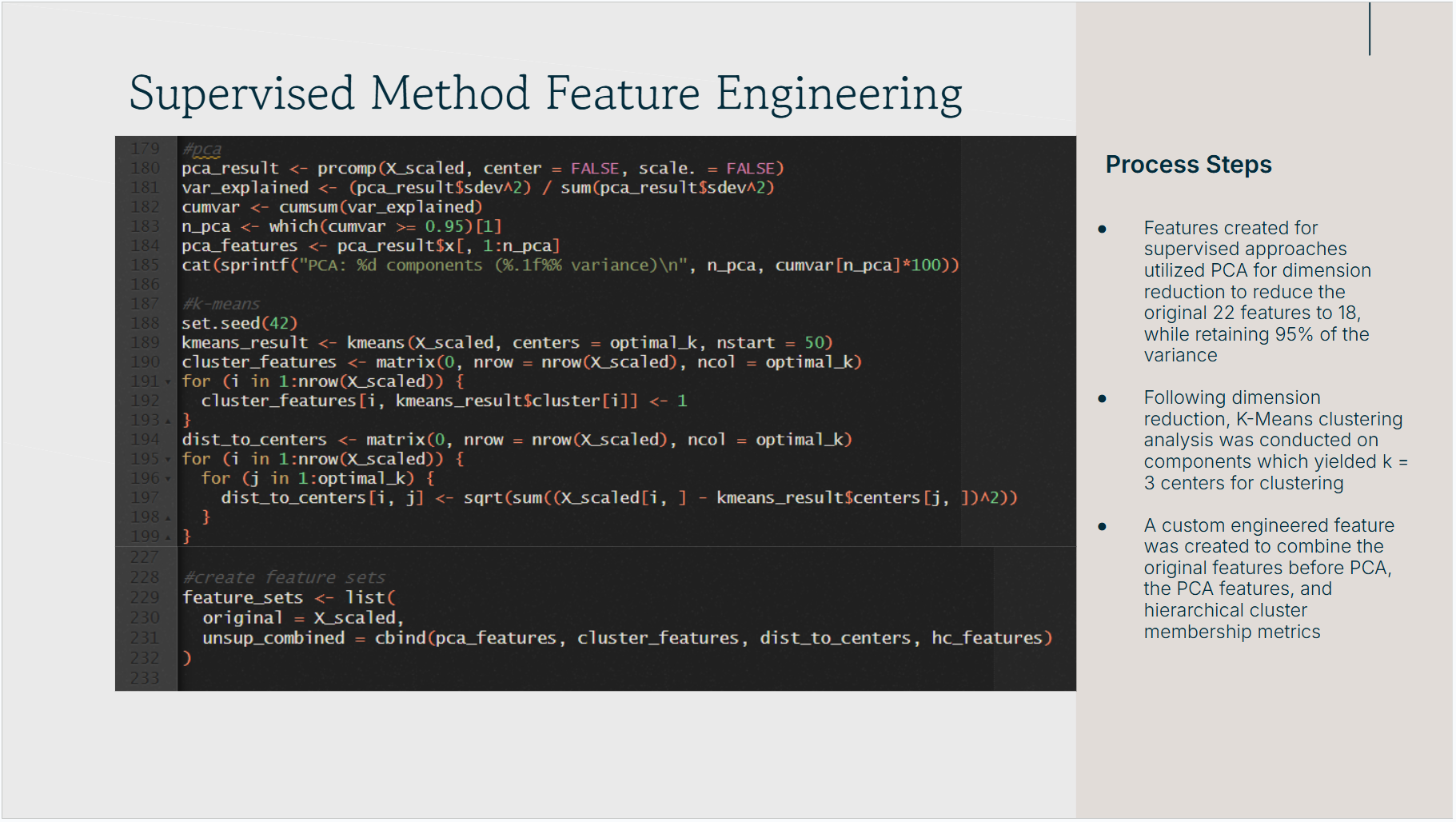
This question was investigated through the use of multiple predictive approaches, ranging from initial clustering analysis to determine validity of categories, and further complex regressional analysis to determine predictive ability of specific psychological measures on students academic performance, wellbeing, and satisfaction.
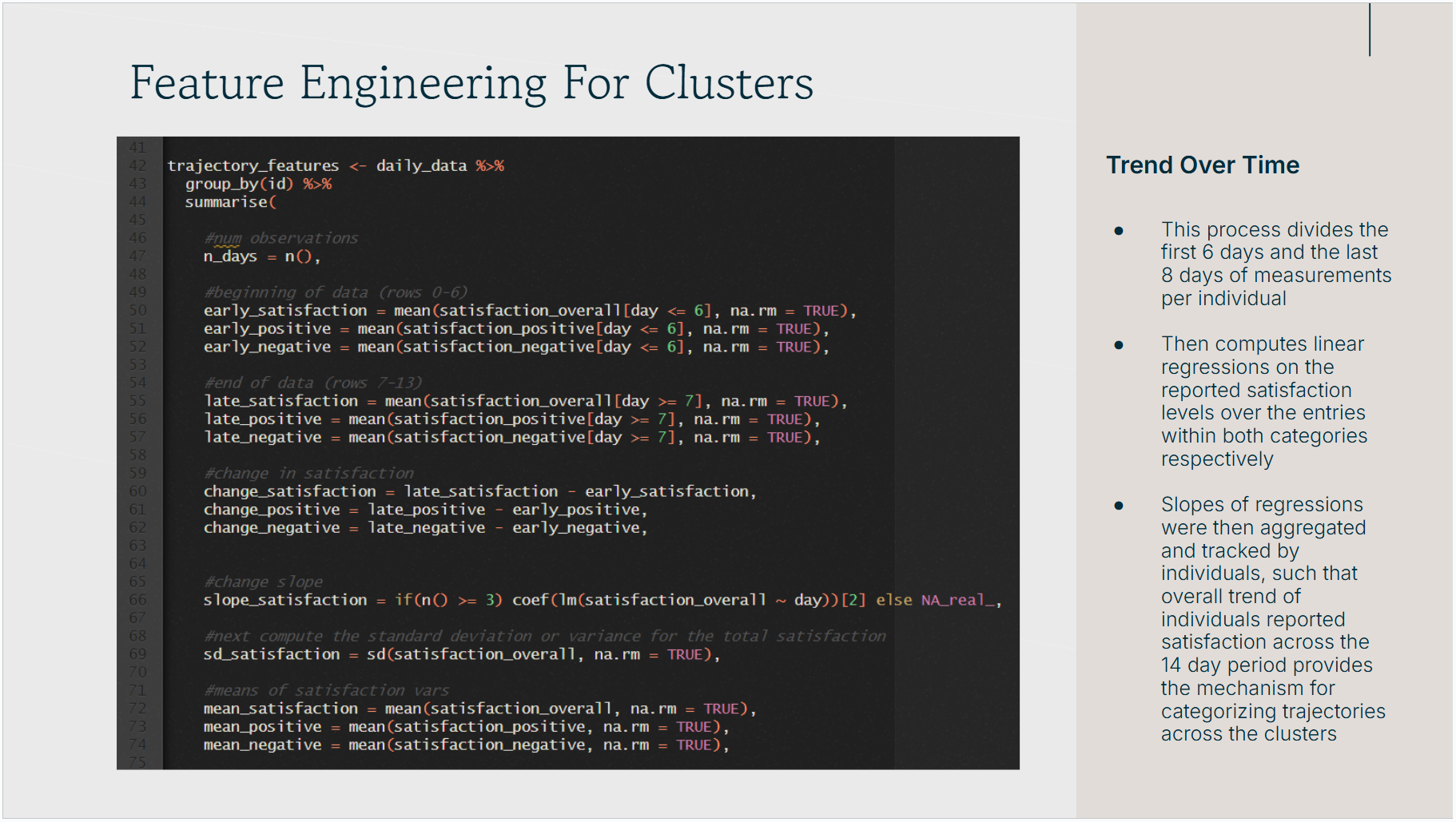
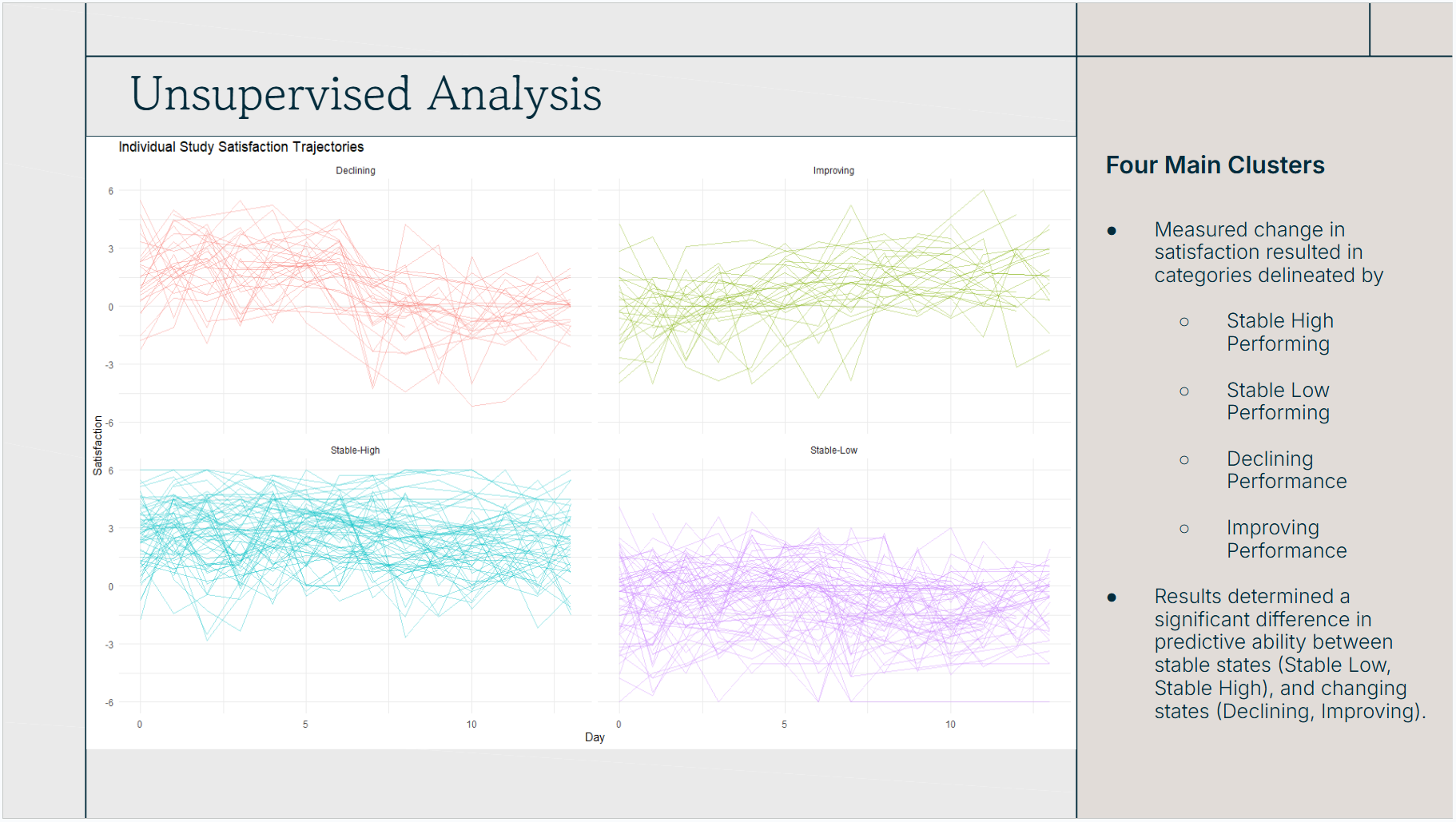
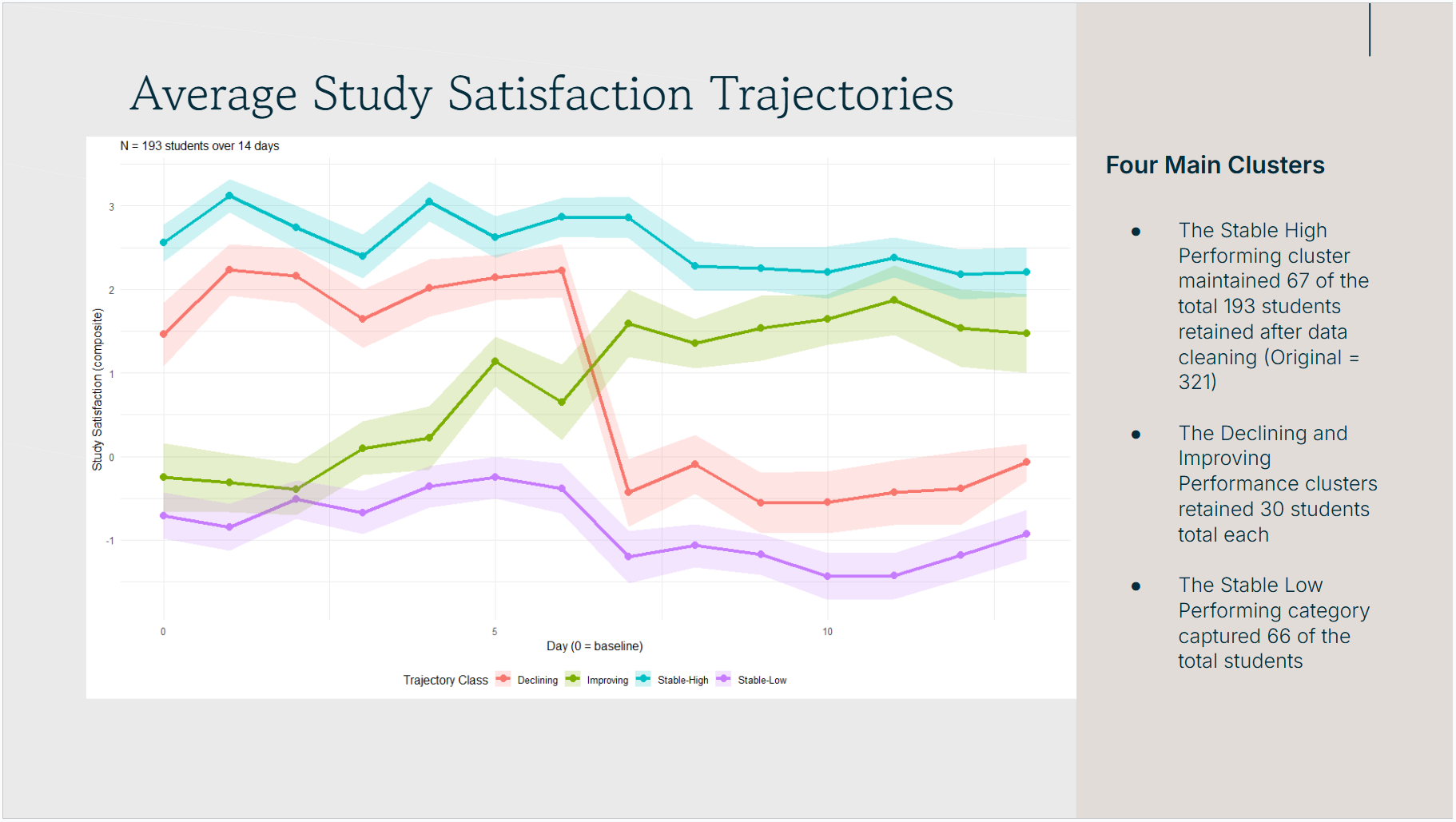
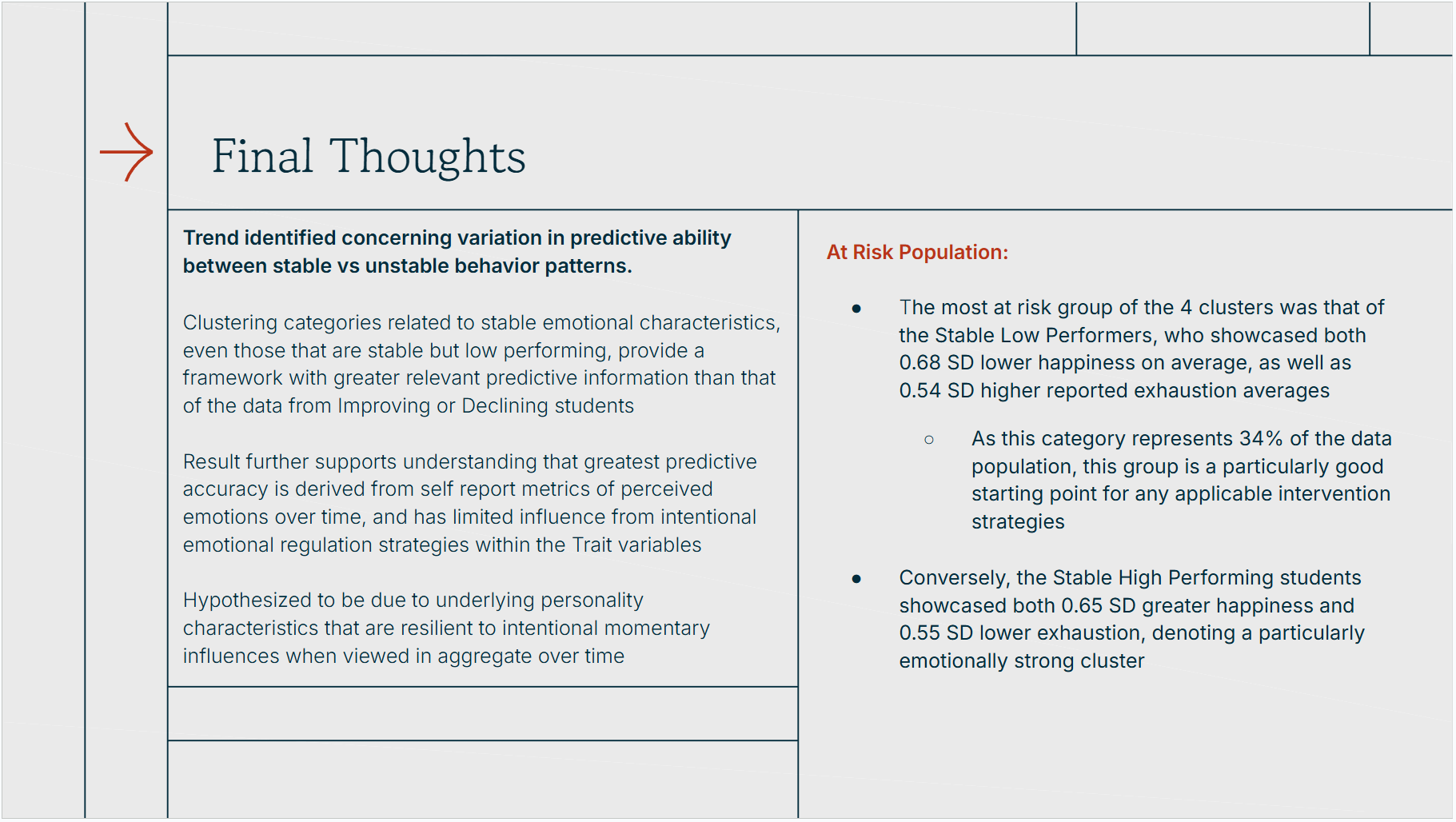
Specifically, clustering analysis was used to track k = 4 clusters after analysis determined significant variance between 4 unique categories of students based on changes in students self reported satisfaction with their studies over a 14 day period.
This measured change in satisfaction resulted in categories delineated by Stable High Performing, Stable Low Performing, Declining Performance, and Improving Performance metrics.
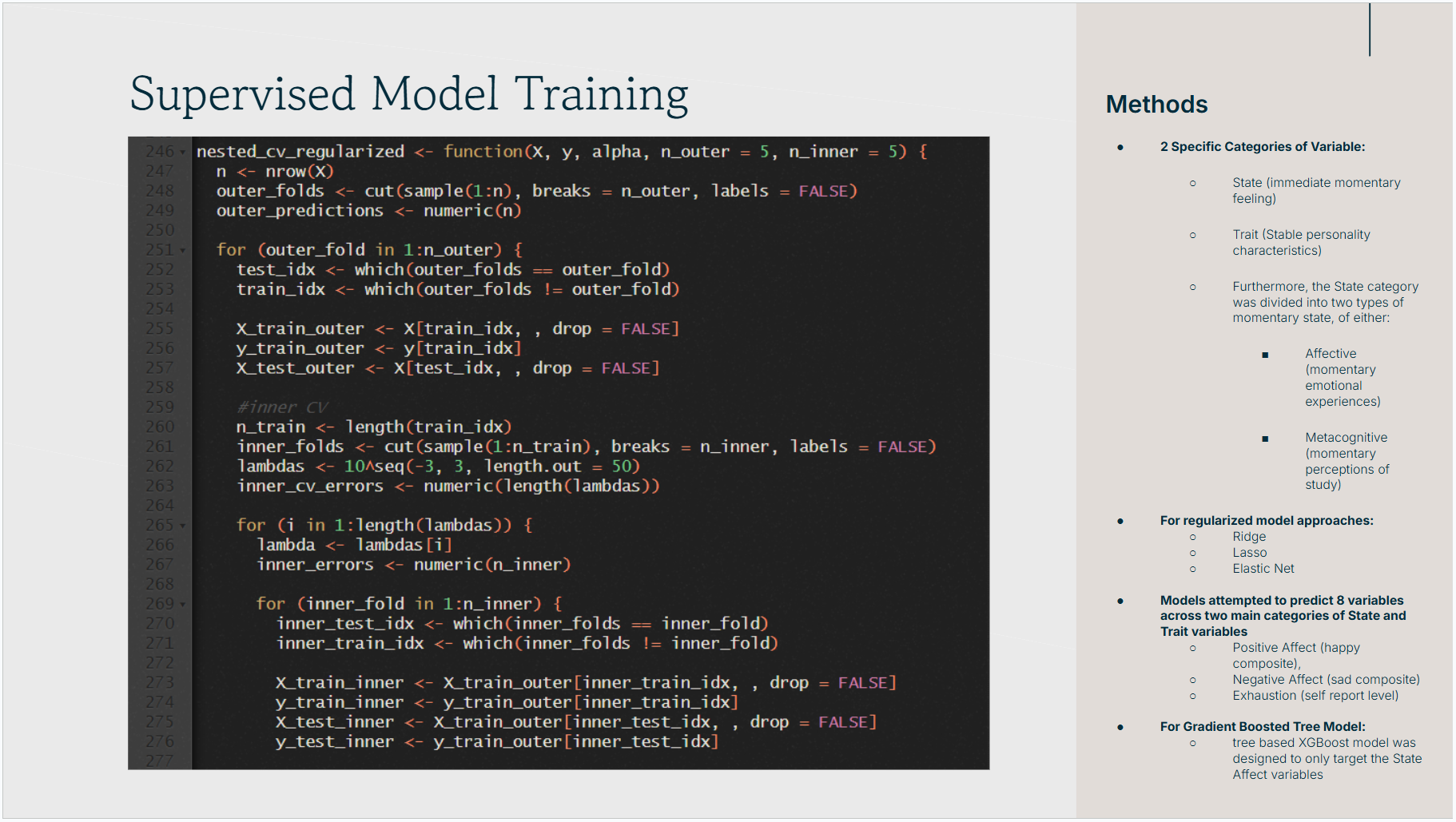
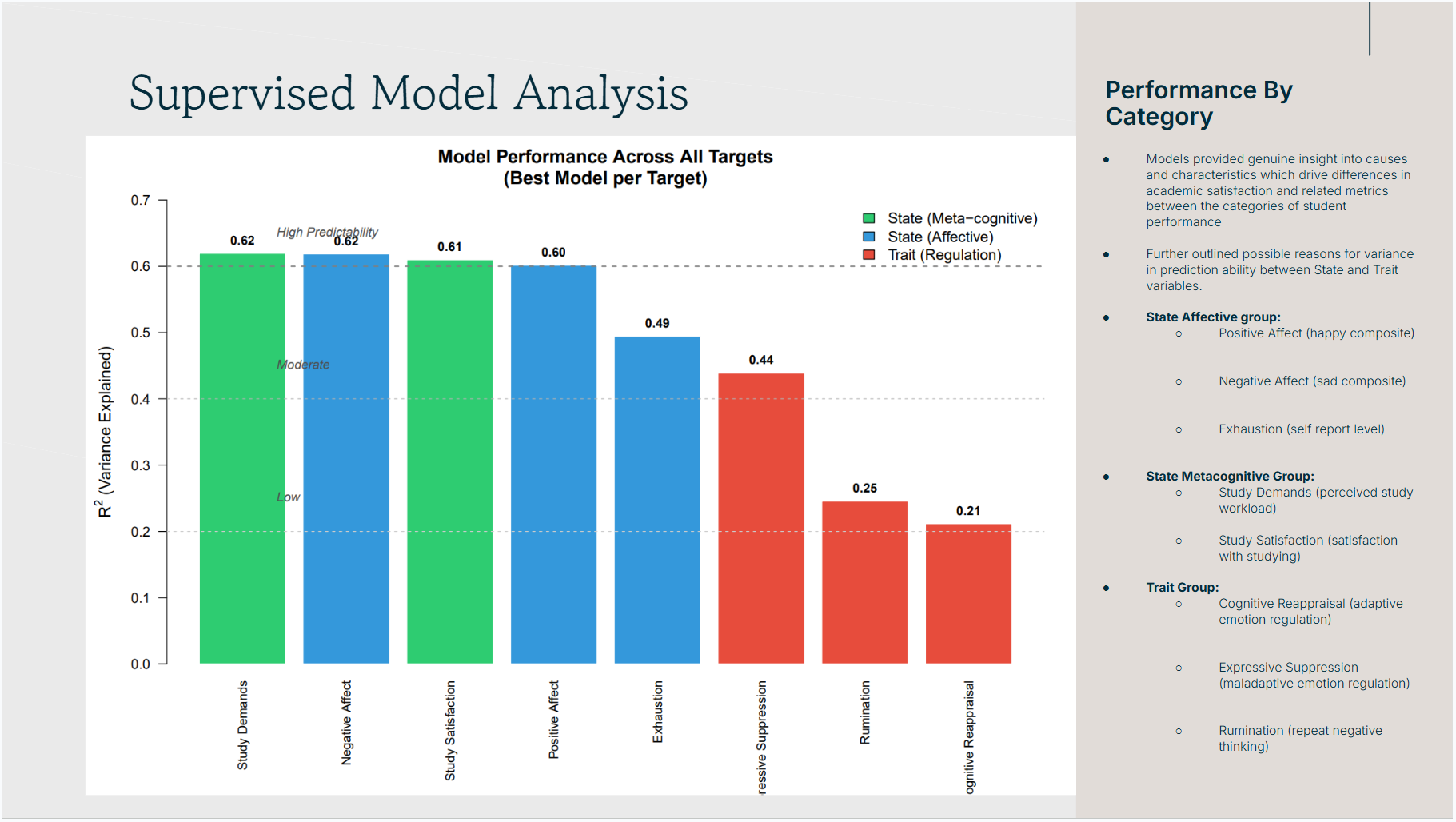
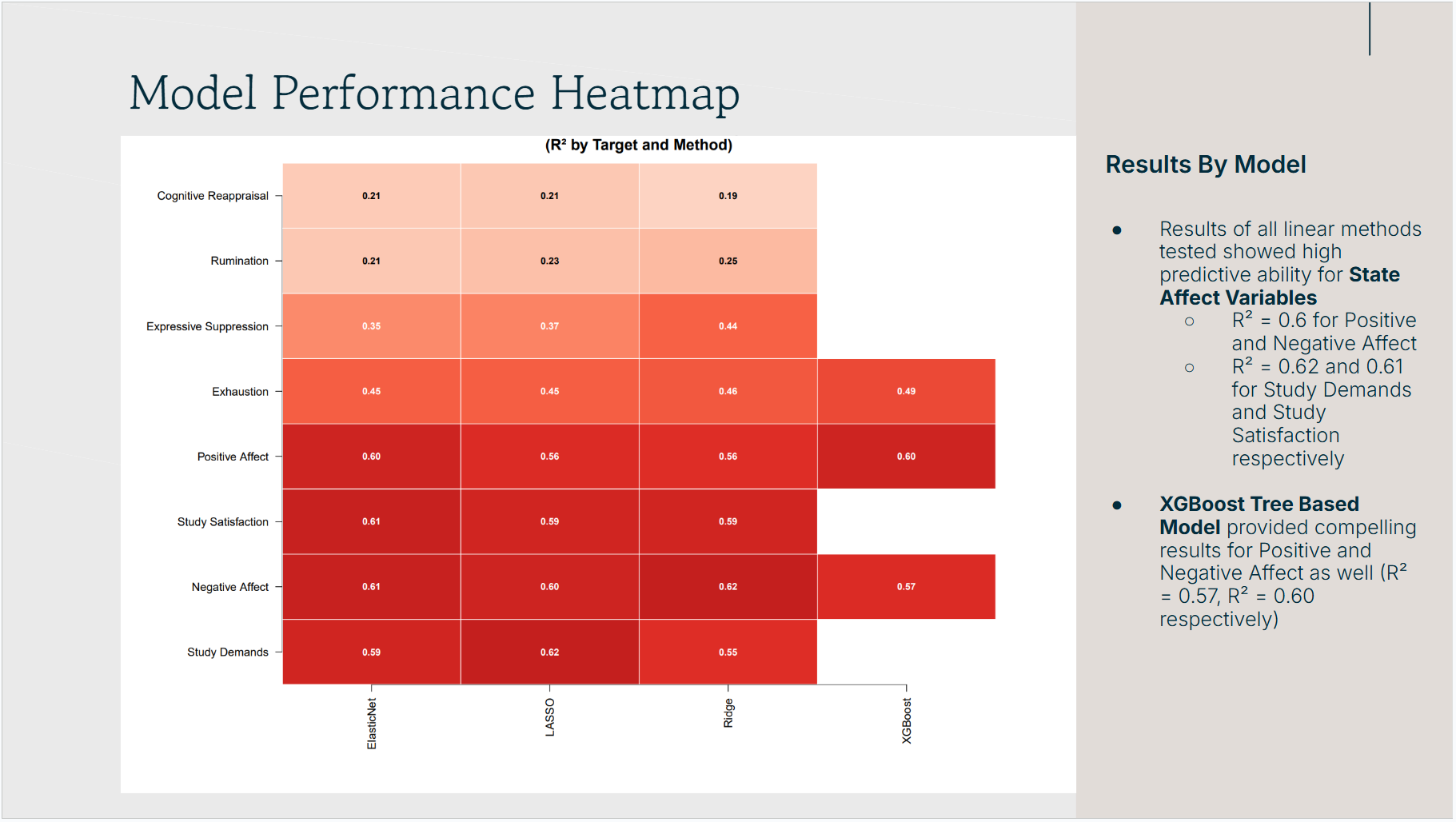
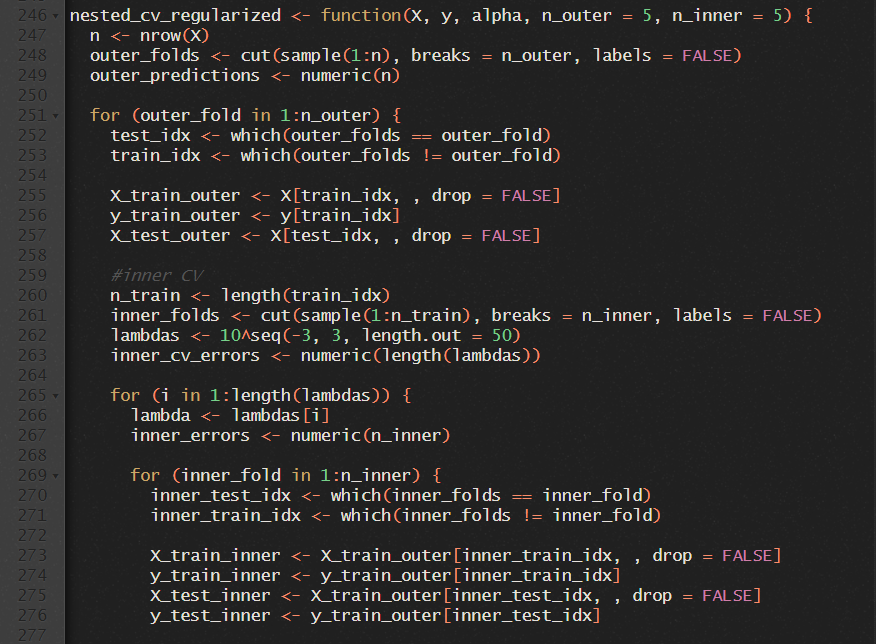
Regression analysis included 3 linear models with regularization (Ridge, Lasso, Elastic Net), followed by a gradient boosting tree based model (XGBoost). Results provided insight into 2 specific categories of variable, related to whether the variable captures a State (immediate momentary feeling) or a Trait (Stable personality characteristics).
Models ultimately provided genuine insight into causes and characteristics which drive differences in academic satisfaction and related metrics between the categories of student performance, and further outlined possible reasons for variance in prediction ability between State and Trait variables.
Technologies Used
Project Gallery